7.28.2006

You Are What You Eat

Summer is the season of vacations. And vacations often mean time spent on the road or in airports where fast food is the easiest thing to grab when you need a quick meal or snack. The good news is that these outposts of instant gratification have all made great strides toward adding healthier choices to their menus. But the bad news is that the majority of fast food offerings are still loaded with excess calories and fat.


It looks like the breakfast at "Micky D's" leads the pack. I can't say I'm surprised.


 Save This Page

7.20.2006

Ultrasonic Hemostasis


Ultrasound technology is best-known for its use in producing images of fetuses in the womb. But focused beams of high-intensity sound waves also can be used to stop internal bleeding--an ultrasound application that Philips Research, with funding from the Defense Advanced Research Projects Agency, hopes to adapt for use on the battlefield, where many injuries become fatal because internal bleeding is not stopped in a timely way.


This technology could also certainly have applications for civilians as well. This would be ideal for situations where a bleeding patient is too far away from a trauma center for rapid transport. Also, splenic salvage, or an additional modality for liver hemostasis come to mind.

More.


7.03.2006

Baby Steps In Bionics

UK scientists have developed technology that enables artificial limbs to be directly attached to a human skeleton. The breakthrough, developed by researchers at University College London, allows the prosthesis to breach the skin without risk of infection. The team says early clinical trials have been "very promising". It hopes the work - which is to be published in the Journal of Anatomy - may help survivors of the 7 July bombings, as well as other amputees. The work paves the way for bionic limbs which are controlled by the central nervous system. In the deer antlers it is very much to do with the structure and shape of the bone, and the porosity of the bone. The technique, called Intraosseous Transcutaneous Amputation Prosthesis (ITAP), involves securing a titanium rod directly into the bone. The metal implant passes through the skin and the artificial limb can be directly attached to it.


Source...


Driving Under The Influence...Of a Cell Phone?!

Some U.S. states have banned drivers from chatting on their cell phones while behind the wheel, at least without using headsets. But according to the latest research findings, it may be prudent for local governments to stop people from driving and chatting altogether, given that talking on a mobile phone and driving at the same time is as dangerous as driving whilst drunk.


I'm just not sure about this. I don't think that talking on a cell phone, is quite the same as being legally intoxicated behind the wheel. Then again, I had a patient last month that dropped their cell phone, and crashed their car. Now that is a different story...

Source...


6.29.2006

Breaking News...Not!

Fateh Mohammad, a prison inmate in Pakistan, says he woke up last weekend with a glass lightbulb in his anus.

Wednesday night, doctors brought Mohammad's misery to an end after a one-and-a-half hour operation to remove the object.

"Thanks Allah, now I feel comfort. Today, I had my breakfast. I was just drinking water, nothing else," Mohammad, a grey-beared man in his mid-40s, told Reuters from a hospital bed in the southern central city of Multan.

"We had to take it out intact," said Dr. Farrukh Aftab at Nishtar Hospital. "Had it been broken inside, it would be a very very complicated situation."


I hate to have to tell ABC News this, but this is really not that rare of an event, and certainly not worthy of being on their home page. The patient probably said "I was in the wrong place, at the wrong time." I've heard that story many times.


6.23.2006

The Challenge of Psychiatric Diagnosis

From Slate:
In 1973, academic psychologist D.L. Rosenhan sent himself and seven friends and colleagues to the psychiatric emergency rooms of 12 different hospitals. Each told ER workers that for several weeks he or she had been distressed by voices saying "empty," "hollow," and "thud." The testers gave false names and occupations but otherwise accurately reported their histories, which did not include mental illness. In all 12 instances they were admitted to a psychiatric ward. At that point, they stopped pretending to have symptoms. Nonetheless, they were held for an average of 19 days (their stays ranged from seven to 52 days) and were all released with a diagnosis of "schizophrenia, in remission," or something like it. Rosenhan titled his study "On Being Sane in Insane Places" and argued that psychiatric diagnosis has more to do with the presumptions of clinicians, and their tendency to treat ordinary behavior as pathological when it occurs on a psych ward, than with a rational assessment of symptoms.


I hadn't heard of this study before, but it is fascinating. Unlike many other medical specialties, psychiatric diagnosis can be subjective and elusive. When a surgeon removes an appendix, and sends it to a pathologist, it is either read as appendicitis or not. Cardiologists rely on EKG's and troponins to diagnose myocardial infarctions with a high degree of accuracy. There is very little gray area in these two clinical situations.

However, psychiatrists have no "gold standard" test to rule in or rule out schizphrenia. No CT scan, angiogram, or bloodwork is going to definitively rule in or out a diagnosis like schizophrenia, manic depression, or an anxiety disorder. For better or worse, the mental health clinician must diagnose based on the observed signs and symptoms, carefully ruling out other disorders along the way (like hypothyroidism mimicking depression for example).

Based on the "clinical gestalt," the psychiatrist then attempts to fit the patient into one of the known disorders of the DSM. Of course, there are some vague categoreis for things that don't quite fit, like "psychosis nos" (nos=not otherwise specified).

The other pitfall is that once a patient gets labeled with something, even when the symptoms have long resolved, they end up being branded for life. Before a patient gets labeled a schizophrenic, for example, the clinician needs to be quite sure that the patient truly has that disorder.


6.09.2006

Detoxing From Video Games

From The Washington Post:
An addiction center is opening Europe's first detox clinic for game addicts, offering in-house treatment for people who can't leave their joysticks alone.

Video games may look innocent, but they can be as addictive as gambling or drugs _ and just as hard to kick, says Keith Bakker, director of Amsterdam-based Smith & Jones Addiction Consultants.

Bakker already has treated 20 video game addicts, aged 13 to 30, since January. Some show withdrawal symptoms, such as shaking and sweating, when they look at a computer.

I think the manufacturers make these video games to be addictive. After all, they want you to play their game- a lot. I think that in some cases they have done too good of a job at it, and then we have an addiction. While perhaps not as bad as an addiction to heroin or cigarettes, this can be quite destructive to these folks in the end. Perhaps we'll need a Video Gamer's Anonymous at some point if this keeps up.


5.22.2006

Body Piercing For Better Eyesight


Believe it or not, these folks are serious. By piercing the bridge of the nose, they can then suspend the lenses without the earpieces of the glasses. Why not just get contacts?


5.19.2006

Robot Surgery

A robot surgeon has for the first time carried out a long-distance heart operation completely by itself.

The 50-minute surgery, which took place in a Milanese hospital, was carried out on a 34-year-old patient suffering from atrial fibrillation, or 'heart flutters' .

The operation was initiated and monitored on a PC in Boston, USA, by Carlo Pappone, head of Arrhythmia and Cardiac Electrophysiology at Milan's San Raffaele university. Also watching the operation - a world first - were dozens of heart specialists attending an international congress on arrhythmia in the American city.


Notice that the patient is in another country, even though the computer, and the doctor were in the US? This is undoubtedly because in the US we have too many restrictions, and way too much liability for such things to take place. Are these really protecting us...or just hindering progress?

More.


4.21.2006

TGIF: How To Write A Scientific Paper

The purpose of science is to get paid for doing fun stuff (Schulman et al. 1991). Nominally, science involves discovering something new about the Universe, but this isn't really necessary. What is really necessary is a grant. In order to obtain a grant, your application must state that the research will discover something incredibly fundamental. The grant agency must also believe that you are the best person to do this particular research, so you should cite yourself both early (Schulman 1994) and often (Schulman et al. 1993c). Feel free to cite other papers as well (e.g., Blakeslee et al. 1993; Levine et al. 1993), so long as you are on the author list.
Once you get the grant, your university, company, or government agency will immediately take 30 to 70% of it so that they can heat the building, pay for Internet connections, and purchase large yachts.


While I wouldn't follow these directions to the letter, among the tongue in cheek, there is some truth here.

More.


4.17.2006

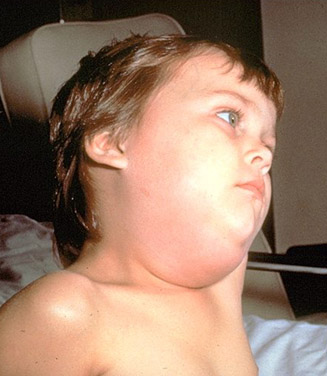
Mumps Outbreak

From Chicago Tribune:
The mumps outbreak that has spread from Iowa to infect 72 people in Illinois amounts to a rare encore appearance of a disease that once was an ever-present fixture of childhood.

The latest outbreak is tiny compared with other illnesses that still cause widespread problems, such as influenza or strep infections. Yet experts say the local bump in mumps cases is a reminder of the risks that remain even from a virus that has been largely eliminated from this country.

One downside to the near-universal vaccination against childhood afflictions such as mumps and chickenpox is that the diseases can strike with more force when people contract them as adults. Most of the recent patients in Iowa and Illinois have been college age or older. Though mumps rarely causes serious medical problems, young men who contract the disease can have fertility problems later.


I heard about the mumps outbreak last week, and couldn't believe it. When was the last time anyone saw this disease? This was something we learned about in medical along with smallpox, but never treated anyone with it.

Head on over to here for a brush up on this reemerging disease.


4.09.2006

Overpriced Medical Bills

From the Med Bill Advisor Blog:

American hospitals are fleecing patients out of billions of dollars annually, and experts say that while some of the overcharges are honest errors, many are deliberate.

That’s because hospital bills are next to impossible for consumers to understand, which means hospitals can hide improper charges behind mysterious medical terminology and baffling codes.

That’s what Nora Johnson found when her 56-year-old husband, Bill, underwent hip-replacement surgery in 1999. The cost of the operation was $25,000.

Knowing that her family would have to pay a percentage of the costs, she requested an itemized bill.

$129 for a box of tissues
“What I got was five feet of single-spaced names and codes,” recalls Johnson. Written in “hospital-speak,” some of it made sense, she says, while some of it was absurd. “Like the charge for newborn blood tests and a crib mobile. That stopped me in my tracks,” recalls Johnson. “As far as I know, my husband never had a baby.”

Johnson, from Caldwell, W.Va., was so shocked by the overcharges she became a trained medical billing advocate. Today, she audits hospital bills for consumers and for state employees in West Virginia.

“More than 90% of the hospital bills I’ve audited have gross overcharges,” says Johnson.

Estimates on hospital overcharges run up to $10 billion a year, with an average of $1,300 per hospital stay. Other experts say overcharges make up approximately 5% of hospital bills.


It's articles like this that make the public think that the doctors are getting rich off of this. We doctors know that this benefits the hospitals financially. However, this is a rip off to the public, and while the hospital is collecting over $100 for a box of tissues, we can't even get the $500 for an appendectomy that we got out of bed a 2AM to do! Where will this all end?


4.07.2006

TGIF


Taxachusetts

From the Kansas City Star:
Amid rising health-care costs and growing legions of uninsured, Kansans and Missourians are looking to Massachusetts.

The Bay State’s Legislature on Tuesday passed a groundbreaking bill to provide nearly universal health-care coverage. The bill, which Republican Gov. Mitt Romney says he will sign, requires all Massachusetts residents to obtain health insurance.

People who can afford private insurance will incur financial penalties if they do not buy coverage. Government subsidies to private insurers will enable more of the working poor to buy insurance and will make more children eligible for free coverage. Businesses with more than 10 employees that don’t provide coverage will get hit with fees of up to $295 per employee per year.

The program will cost more than $1 billion a year, though much of that money will come from shifting existing funds. Massachusetts will provide $125 million in new money, mostly to help pay for health insurance for lower-income residents. The rest could come from existing programs and the penalties paid by businesses and individuals who don’t follow the law’s mandates.

The bill, the first of its kind in the nation, is poised to take effect as America grapples with the problems of 45 million uninsured individuals. Health experts say that the lack of health insurance frequently leads to illness and premature death, and that the health-care costs of the uninsured get shifted to those who have insurance.


As a physician, and an individual who had no employer provided health insurance for several years, I am divided on this issue. While I don't think that "bigger government" is ever the solution, clearly the current system is broken, and needs improvement.

As a nation, we probably can't afford a true universal health care system. However, we have the money as a society for indigent care, often provided in our Emergency Departments. Just the other night, the ED physician was complaining to me at 2 AM as to why he was seeing a child with an ear infection. That child would clearly be better served in a pediatrician's office during the daylight hours. After all, that one visit to the ED probably could pay for a years worth of visits to the ED.

I give credit to Massachsetts for grappling with the problem, and trying to urge all to get health insurance. They are continuing with an employer based model, that has served the needs of many, but clearly not all.

However, if an employer chooses not to provide insurance, they pay a $295 fine...annually per employee. In the current marketplace, one month's insurance will cost more than that, so this is not much of a fine at all. There is also talk of eliminating the fine altogether.

Also, if an individual chooses not to get health insurance, they pay extra state taxes. Isn't this going to place an unfair burden on the already cash strapped poorest of the state?

In my opinion, this is too radical a step for the nation's uninsured. Some might see it as a way for a state to collect more taxes under the guise of providing universal healthcare. I would like to see as a first step, a way that families, that are not otherwise eligible, be able to "buy in" to Medicare. Also, employers that have someone working for them need to provide insurance for them, and not redefine them as per diem, or consultants for the sake of not providing benefits.

If Massachsetts real goal was to bring the issue of affordable health care for the uninsured to the national table for debate, they clearly have succeeded. In the meantime, we'll all have to see how this plays out, and it's not clear how many folks will be helped. Don't think for a minute that now everyone in the state will be automatically covered.


3.31.2006

Faster X-Ray Vision


Just when you thought that there was nothing new in plain radiography, I read about Statscan.
The Statscan Critical Imaging System is a flexible format digital radiography (DR) system aimed specifically at the needs of emergency medical centers and is designed to meet the radiography needs of both trauma patients and standard emergency patients. Statscan gives critical life-saving

information to the medical staff by enabling them to have a complete picture—literally from head to toe—of a patient’s injuries, faster and with less interference with patient stabilization efforts than ever before possible.


I remember once that we had a trauma patient with multiple fractures, but no internal injury. I was trying to get the X-rays done so that the ortho team could take the patient to the OR. The junior ortho resident told me not to worry about it, they would just fluoro the entire patient as a screen, and then get dedicated films of the positive fractures. It was quick, and worked well for that patient. Now I hear that Lodox came up with a product that takes this concept one step further.

The idea of entire body radiogrpahy grew out of the need for security at South African diamond mines. I'm not sure a daily X-ray at the end of your shift is the greatest idea, but it definitely kept the miners from getting sticky fingers, and taking some product sample home from the mine.

Now the Statscan machine claims that they can radiograph an entire body in as little as 13 seconds. At my institution, I can't even find the radiology tech that quickly to get the portable X-ray machine! Seriously, we can often get a CT scan faster than a plain film. This could definitely help speed up care in many patients. The Statscan would also be wonderful for those trauma patients that complain of pain from head to toe, and you're obligated to order a ton of X-rays.

Reportedly, the entire body film is viewed on a computer workstation monitor. The standard is an AP view, but a lateral can also be done. There seem to be some issues in neck clearance by Statscan imaging alone, but this is useful as a screen, and for fracture workup.

The Statscan is on my Christmas list!