4.21.2006

TGIF: How To Write A Scientific Paper

The purpose of science is to get paid for doing fun stuff (Schulman et al. 1991). Nominally, science involves discovering something new about the Universe, but this isn't really necessary. What is really necessary is a grant. In order to obtain a grant, your application must state that the research will discover something incredibly fundamental. The grant agency must also believe that you are the best person to do this particular research, so you should cite yourself both early (Schulman 1994) and often (Schulman et al. 1993c). Feel free to cite other papers as well (e.g., Blakeslee et al. 1993; Levine et al. 1993), so long as you are on the author list.
Once you get the grant, your university, company, or government agency will immediately take 30 to 70% of it so that they can heat the building, pay for Internet connections, and purchase large yachts.


While I wouldn't follow these directions to the letter, among the tongue in cheek, there is some truth here.

More.


4.17.2006

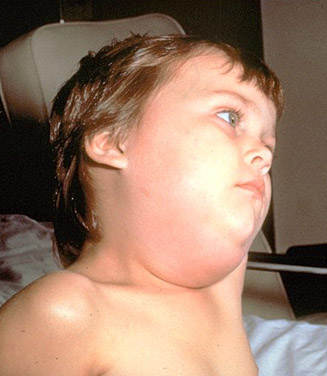
Mumps Outbreak

From Chicago Tribune:
The mumps outbreak that has spread from Iowa to infect 72 people in Illinois amounts to a rare encore appearance of a disease that once was an ever-present fixture of childhood.

The latest outbreak is tiny compared with other illnesses that still cause widespread problems, such as influenza or strep infections. Yet experts say the local bump in mumps cases is a reminder of the risks that remain even from a virus that has been largely eliminated from this country.

One downside to the near-universal vaccination against childhood afflictions such as mumps and chickenpox is that the diseases can strike with more force when people contract them as adults. Most of the recent patients in Iowa and Illinois have been college age or older. Though mumps rarely causes serious medical problems, young men who contract the disease can have fertility problems later.


I heard about the mumps outbreak last week, and couldn't believe it. When was the last time anyone saw this disease? This was something we learned about in medical along with smallpox, but never treated anyone with it.

Head on over to here for a brush up on this reemerging disease.


4.09.2006

Overpriced Medical Bills

From the Med Bill Advisor Blog:

American hospitals are fleecing patients out of billions of dollars annually, and experts say that while some of the overcharges are honest errors, many are deliberate.

That’s because hospital bills are next to impossible for consumers to understand, which means hospitals can hide improper charges behind mysterious medical terminology and baffling codes.

That’s what Nora Johnson found when her 56-year-old husband, Bill, underwent hip-replacement surgery in 1999. The cost of the operation was $25,000.

Knowing that her family would have to pay a percentage of the costs, she requested an itemized bill.

$129 for a box of tissues
“What I got was five feet of single-spaced names and codes,” recalls Johnson. Written in “hospital-speak,” some of it made sense, she says, while some of it was absurd. “Like the charge for newborn blood tests and a crib mobile. That stopped me in my tracks,” recalls Johnson. “As far as I know, my husband never had a baby.”

Johnson, from Caldwell, W.Va., was so shocked by the overcharges she became a trained medical billing advocate. Today, she audits hospital bills for consumers and for state employees in West Virginia.

“More than 90% of the hospital bills I’ve audited have gross overcharges,” says Johnson.

Estimates on hospital overcharges run up to $10 billion a year, with an average of $1,300 per hospital stay. Other experts say overcharges make up approximately 5% of hospital bills.


It's articles like this that make the public think that the doctors are getting rich off of this. We doctors know that this benefits the hospitals financially. However, this is a rip off to the public, and while the hospital is collecting over $100 for a box of tissues, we can't even get the $500 for an appendectomy that we got out of bed a 2AM to do! Where will this all end?


4.07.2006

TGIF


Taxachusetts

From the Kansas City Star:
Amid rising health-care costs and growing legions of uninsured, Kansans and Missourians are looking to Massachusetts.

The Bay State’s Legislature on Tuesday passed a groundbreaking bill to provide nearly universal health-care coverage. The bill, which Republican Gov. Mitt Romney says he will sign, requires all Massachusetts residents to obtain health insurance.

People who can afford private insurance will incur financial penalties if they do not buy coverage. Government subsidies to private insurers will enable more of the working poor to buy insurance and will make more children eligible for free coverage. Businesses with more than 10 employees that don’t provide coverage will get hit with fees of up to $295 per employee per year.

The program will cost more than $1 billion a year, though much of that money will come from shifting existing funds. Massachusetts will provide $125 million in new money, mostly to help pay for health insurance for lower-income residents. The rest could come from existing programs and the penalties paid by businesses and individuals who don’t follow the law’s mandates.

The bill, the first of its kind in the nation, is poised to take effect as America grapples with the problems of 45 million uninsured individuals. Health experts say that the lack of health insurance frequently leads to illness and premature death, and that the health-care costs of the uninsured get shifted to those who have insurance.


As a physician, and an individual who had no employer provided health insurance for several years, I am divided on this issue. While I don't think that "bigger government" is ever the solution, clearly the current system is broken, and needs improvement.

As a nation, we probably can't afford a true universal health care system. However, we have the money as a society for indigent care, often provided in our Emergency Departments. Just the other night, the ED physician was complaining to me at 2 AM as to why he was seeing a child with an ear infection. That child would clearly be better served in a pediatrician's office during the daylight hours. After all, that one visit to the ED probably could pay for a years worth of visits to the ED.

I give credit to Massachsetts for grappling with the problem, and trying to urge all to get health insurance. They are continuing with an employer based model, that has served the needs of many, but clearly not all.

However, if an employer chooses not to provide insurance, they pay a $295 fine...annually per employee. In the current marketplace, one month's insurance will cost more than that, so this is not much of a fine at all. There is also talk of eliminating the fine altogether.

Also, if an individual chooses not to get health insurance, they pay extra state taxes. Isn't this going to place an unfair burden on the already cash strapped poorest of the state?

In my opinion, this is too radical a step for the nation's uninsured. Some might see it as a way for a state to collect more taxes under the guise of providing universal healthcare. I would like to see as a first step, a way that families, that are not otherwise eligible, be able to "buy in" to Medicare. Also, employers that have someone working for them need to provide insurance for them, and not redefine them as per diem, or consultants for the sake of not providing benefits.

If Massachsetts real goal was to bring the issue of affordable health care for the uninsured to the national table for debate, they clearly have succeeded. In the meantime, we'll all have to see how this plays out, and it's not clear how many folks will be helped. Don't think for a minute that now everyone in the state will be automatically covered.


3.31.2006

Faster X-Ray Vision


Just when you thought that there was nothing new in plain radiography, I read about Statscan.
The Statscan Critical Imaging System is a flexible format digital radiography (DR) system aimed specifically at the needs of emergency medical centers and is designed to meet the radiography needs of both trauma patients and standard emergency patients. Statscan gives critical life-saving

information to the medical staff by enabling them to have a complete picture—literally from head to toe—of a patient’s injuries, faster and with less interference with patient stabilization efforts than ever before possible.


I remember once that we had a trauma patient with multiple fractures, but no internal injury. I was trying to get the X-rays done so that the ortho team could take the patient to the OR. The junior ortho resident told me not to worry about it, they would just fluoro the entire patient as a screen, and then get dedicated films of the positive fractures. It was quick, and worked well for that patient. Now I hear that Lodox came up with a product that takes this concept one step further.

The idea of entire body radiogrpahy grew out of the need for security at South African diamond mines. I'm not sure a daily X-ray at the end of your shift is the greatest idea, but it definitely kept the miners from getting sticky fingers, and taking some product sample home from the mine.

Now the Statscan machine claims that they can radiograph an entire body in as little as 13 seconds. At my institution, I can't even find the radiology tech that quickly to get the portable X-ray machine! Seriously, we can often get a CT scan faster than a plain film. This could definitely help speed up care in many patients. The Statscan would also be wonderful for those trauma patients that complain of pain from head to toe, and you're obligated to order a ton of X-rays.

Reportedly, the entire body film is viewed on a computer workstation monitor. The standard is an AP view, but a lateral can also be done. There seem to be some issues in neck clearance by Statscan imaging alone, but this is useful as a screen, and for fracture workup.

The Statscan is on my Christmas list!


3.24.2006

X-ray Diagnosis of the Week...

From Oldster-

For the diagnosis, click here.


What's that sound?

From TechNudge:
An electronic stethoscope that doubles as a virtual patient [by simulating patients' heart sounds] dramatically improved the accuracy of medical residents in identifying heart sounds, according to a study presented today at the American College of Cardiology.

Research has revealed an alarmingly low 21 percent accuracy rate among medical residents using a stethoscope to discern abnormal heart sounds. To address this handicap, ...Michael Barrett, M.D., clinical associate professor of medicine and cardiologist at Temple University School of Medicine and Hospital, used an electronic stethoscope that plays back recorded heart sounds with a group of residents and asked them to listen repeatedly to each one.


Good to know, just in case the echo machine is getting serviced.


On Bird Flu & Person To Person Transmission

From Red Herring:
Scientists said Thursday they have pinned down why the H5N1 bird flu virus has trouble jumping from person to person, even though it can replicate efficiently in human lungs.

Currently, nearly all the 184 cases of H5N1 human infections, which have led to 103 deaths, have occurred because people picked up the virus from birds.

The virus has the potential to become a pandemic strain if it develops the ability to move easily between people in their coughs and sneezes, for instance, much like seasonal influenzas.

Published in the journal Nature, scientists from the University of Wisconsin, Madison and the University of Tokyo, Japan, have found that H5N1 needs to replicate more in cells higher up in the airway to make this possible.

The human viruses responsible for seasonal flus and the deadly H5N1 bird flu virus bind to slightly different versions of the same molecule. Found on the surface of cells which line the airways of the lungs, this molecule seems to hold the key to the development of a pandemic strain.

The version bound by common human flus tends to be found higher up in the respiratory tract, whereas the version of the molecule bound by H5N1 occurs in the air sacs located at the deepest part of the lungs.

Put simply, the higher up in the lungs the virus replicates, the better chance it has of being carried out of the lungs in a cough or a sneeze.


3.21.2006

On Hand Sanitizers

From NY Times:
Many such sanitizers — whether a brand name or a generic version — work well, and are increasingly found in hallway dispensers in hospitals, schools, day care centers and even atop the gangways of cruise ships as one more safeguard against the hand-to-mouth spread of disease. Several studies from such settings have shown that use of the alcohol-based rubs on hands that aren't visibly soiled seems particularly helpful in curbing the spread of bad stomach and intestinal bugs.

But a study published in this month's issue of the journal Emerging Infectious Diseases found that at least one brand of sanitizer found on store shelves, as well as some recipes for homemade versions circulating on Web sites about crafts or directed at parents, contain significantly less than the 60 percent minimum alcohol concentration that health officials deem necessary to kill most harmful bacteria and viruses.


3.17.2006

TGIF


Here is a little something for first year students or those wishing to enter. It was originally published under another name. Hope this helps.

Dont ask me but somehow I received your message about Medical School. I am just starting my 3rd year clerkships as a medical student at LSU in New Orleans, LA. There are a few things I would like to tell you before you start medical school....and, of course, these are only my opinions and may not represent the opinions of anyone else in this entire world....so take it with a grain of salt.

01 - Everyone, including my doctor, told me to get the hell out of medicine before I got in.


02 - I busted my ass in high school, college, etc...to get to med school.


03 - Once in medical school, what you did to get you there no longer matters.


04 - Be prepared to study....then study somemore, and then a little more... and then be prepared to not do well on the test.


05 - Be prepared to accept the reality that you may be an idiot (this came as a shock to me).


06 - Be thankful that everyone else in your class is also an idiot and no one expects you to know everything all at once, and for every test.


07 - Realize that getting ahead in med school means making lots of friends ... those who step on toes to get to the top are quickly shunned by the rest of the class. This is very bad since people tend to get a hold of old tests, helpful hints, book recommendations, etc..that will be of great benefit to you. If you are the smartest person in the class...dont try to show off and be cocky. There will be plenty of opportunities for people to undermine you if they decide they dont like your attitude. In short, have fun, be nice....make sure you are likable to a large number of people.


08 - No one can go through medical school 8 times, so dont be such a "pal" that you end up doing extra work (typing a review sheet, for example) for your friends while they are out having a good time.


09 - For me, the first year was NOT the hardest. This is b/c I was used to busting my ass to get into medical school that I never slowed down. For some, it is the "wake up call" if you never studied in college.


10 - The second year IS the hardest, its survival of the fittest. They want you to know everything about everything, and some more in between. People quit after every exam.


Lot's More...


Sleep Eating

From CBS:
Some people don't just walk in their sleep, they eat as well.

As sleep disorders go, it's one of the more bizarre, observes CBS News Correspondent John Blackstone.

He says Dr. Mark Mahowald and other sleep researchers have discovered that nocturnal eating may be a side effect of the popular sleep medication, Ambien.

That comes on the heels of reports that some Ambien users may drive while sleeping.

Mahowald, who's medical director of the Minnesota Regional Sleep Disorders Center in Minneapolis, tells Blackstone, "We've had people eat very inappropriate things that they would never eat while awake. Some example would be buttered cigarettes, salt sandwiches, raw bacon."

And sleep-binging could leave its mark – on waistlines.

"I put on over 100 pounds since I've been on Ambien," says Brenda Pobre, who couldn't figure out why she was gaining so much weight.

"I would wake up in the morning and there would be candy wrappers all around the bed," she says. "There would be crumbs in the bed. There would be all kinds of evidence that someone had been eating in the bed. But I had absolutely no recollection of it."


Prostate Cancer Doesn't Like It Hot

From Forbes:
Capsaicin, the component that gives jalapeno peppers their heat, may also kill prostate cancer cells, a new study suggests.

Initial experiments in cancer cells and mice show that capsaicin causes prostate cancer cells to undergo a kind of suicide. Researchers speculate that, in the future, pills containing capsaicin might be used as therapy to prevent prostate cancer's return.

According to their report, capsaicin caused almost 80 percent of prostate cancer cells in the mice to die. In addition, prostate cancer tumors treated with capsaicin were about one-fifth the size of tumors in untreated mice.

"Capsaicin inhibits the growth of human prostate cancer cell in Petri dishes and mice," said lead researcher Dr. H. Phillip Koeffler, director of hematology and oncology at Cedars-Sinai Medical Center and a professor of medicine at the University of California, Los Angeles. Based on the findings, Koeffler believe the next step is a trial to see if it works in patients with prostate cancer.

The report appears in the March 15 issue of Cancer Research.


Magnets Associated with Pediatric Death

From Seattle Times:
The hospitalization of a second child who swallowed small magnets from a popular toy led Public Health — Seattle & King County and Children's Hospital & Regional Medical Center to issue an official warning Thursday about the toy's dangers.

Doctors blamed the Magnetix building toys for the death of a toddler in November and the illness of a 5-year-old boy currently in serious condition at Children's.

The 5-year-old's parents took him to the hospital last week with abdominal pain, vomiting and fever. During surgery, doctors found two small magnets from the Magnetix toys had eroded holes through his intestine.


Atkins Causing Ketoacidosis

From Daily Mail:
People who strictly follow the Atkins diet could develop a potentially fatal blood disorder, doctors say.
A medical team described how one 40-year-old woman developed the dangerous condition after cutting out carbohydrates and living on meat, cheese and salads for a month.

The obese woman, who had lost nine kilograms, was taken to casualty after vomiting up to six times a day and feeling increasingly short of breath.

The Atkins diet is "far from healthy" say doctors. Sticking to just salads, meat and cheese could put you at risk of a dangerous blood condition.

She was diagnosed as having ketoacidosis, where dangerous levels of acids had built up in the blood and was placed in an intensive care unit.

The woman had rigorously followed the Atkins diet, which claims to produce rapid weight loss, and taken the recommended precautions, including using vitamins and other supplements.

She was discharged after four days in February 2004.