12.22.2006

Give That Patient an Emmi


At last! A web-based solution for outsourcing the surgeon-patient relationship! Why ask your doctor about your major operation, when you can fill out a web-form and watch a flash video instead?

Ah, but seriously, we recognize the need for a service like Emmi (it gets patients up-to-speed on the basics, while leaving more time for surgeons to handle specifics. And cut into things).

And what if the patient has a question? Maybe they can IM their doctor...


More.

And More.


 Save This Page

Burning Holiday Calories

Oh, those holiday pitfalls: a martini and a handful of Chex mix at the office party, Grandma’s fruitcake, the plate of gingerbread cookies from your neighbor.

Eating all those goodies will definitely cost you.

To burn off the calories in one gingerbread cookie, you will have to swim 18 minutes. The martini and party mix will take 47 minutes on the bike.

More.


 Save This Page

Plastic Surgey...Not Just For Women Anymore

They're exercising, they've quit smoking and they're eating more healthy foods. But men who end up in the plastic surgeon's chair often say they don't think they look as good as they feel, according to doctors. Some patients are fresh off a divorce or looking for a competitive edge in an office full of young bucks. Others are inspired by wives who have had successful procedures — or are kind enough to ask why their husbands' once-smooth brows now appear permanently furrowed.

From 2000 to 2005, there was a whopping 44 percent increase in minimally invasive cosmetic procedures among men, according to the American Society of Plastic Surgeons. While the jump in demand isn't unique to the gender, doctors say it speaks to many men's desire to boost their looks — often through quickie treatments that don't cause a lot of bruising or require lengthy recovery times.

More.


 Save This Page

Filtering Out CJD

A new blood filter device could in future prevent people being infected with the human form of mad cow disease through transfusions, it was revealed today.

The technique can effectively remove the rogue prion proteins responsible for transmitting brain diseases such as variant CJD.

Although so far only tested on hamster blood containing the prions that cause scrapie, a related disease affecting sheep, scientists believe it can be developed for humans.

More.


 Save This Page

Blame the Microbes!

US scientists have discovered that "gut microbes" - bacteria that live in our digestive tract - could be powerful clues to the cause and treatment of obesity.

This remarkable news was published in Nature this week and conducted at Washington University School of Medicine in St. Louis.

The clue lies in the relative abundance of two major families of intestinal bacteria: Firmicutes and Bacteroidetes.

More.


 Save This Page

The Mistletoe Controversy

From Forbes:

Adding a new twist to the debate over the value of mistletoe as an alternative cancer treatment, British doctors are reporting the case of a patient whose consumption of an extract from the Christmas decoration led to a tumor-like growth.

An accompanying commentary suggests the case provides yet another reason to avoid using mistletoe as anything other than a holiday decoration. But an alternative medicine specialist points out that risks are inherent in conventional medicine, too.

More.

Who knew that mistletoe was so controversial?


 Save This Page

12.01.2006

GHealth

At Google, we often get questions about what we're doing in the area of health. I have been interested in the issues of health care and health information for a while. It is now one of my main focuses here, and I've decided to start posting about it. I've been motivated in this field in part by my personal experiences helping to care for my mother, who recently died from cancer after a four-year battle. While the quality of the medical care my mother received was extraordinary, I saw firsthand how challenged the health care system was in supporting caregivers and communicating between different medical organizations. The system didn't fail completely, but struggled with these phases:

* What was wrong -- it took her doctors nine months to correctly identify an illness which had classic symptoms
* Who should treat her -- there was no easy way to figure out who were the best local physicians and caregivers, which ones were covered by her insurance, and how we could get them to agree to treat her
* Once she was treated, she had a chronic illness, and needed ongoing care and coordinated nursing and monitoring, particularly once her illness recurred


More.

As we generate more and more data in healthcare, the challenge is keeping it all organized and accessible. I often think as I'm trying to jog the memory of an older patient at 2 AM for their medication list in the Emergency Room, there really needs to be a better way to organize and keep folks healthcare information. As another example, I know someone that ended up going to three different hospitals, and three different abdominal CT's for abdominal pain. The fascinating thing, is that even though they were done within a month of each other, there were three different diagnoses! If only someone had access to all the films, the accuracy of the diagnosis could be improved. As we focus on patient safety, and reducing healthcare costs, this is an idea whose time has arrived. I welcome Google to taking on this challenge!


 Save This Page

11.24.2006

Medicine + YouTube = Medicine 2.0 ???

Do you have a question for Dr. Timothy Johnson regarding a recent health issue that you have been dealing with? Send your video question for Dr. Tim to answer on-air, or a text question using the form below.

I think that ABC is trying to capitalize on the popularity of YouTube (if you haven't heard of it yet, it recently got bought by Google for a cool $100 million...) by encouraging viewers to upload videos of their health questions. While this is not such a bad idea, these folks would be better of talking directly with their doctor. Should we call this Medicine 2.0?

Upload your video here.


 Save This Page

On Curing the Common Cold

For hundreds of years people thought the cold was caused by being cold. “You’ll catch your death out there,” people in 18th-century blizzards would say.

It was in the 1920s that we understood the cold to be a viral infection, a nasty little blighter that invades your body, multiplies and then causes you to sneeze so that millions of its brothers can shoot up the noses and through the eyes of everyone within 5ft.

Since then, we’ve been to the moon, invented the personal stereo, devised the speed camera and created the pot noodle. But still no one knows how to keep the cold virus at bay.

Aids came along and within about 10 minutes Elton John had set up his charity and was rattling the ivories from Pretoria to Pontefract so that now, while there’s no cure, there is a raft of drugs to keep the symptoms and effects at arm’s length. But the cold? Not a sausage.

More.


 Save This Page

On the Regulations We Deal With

I shovel telomeres for a living. My friends in the computer industry are always asking me: “Why can’t you biotech guys cure cancer? Or aging? Or the common cold? What do you do with all those billions of government research dollars?”

Well, it’s time to confess: Biologists bought three stuffed mice and two petri dishes in 1974. These are recycled in staged publicity photos in such high-profile popular glossies as Proceedings of the National Academy of Sciences, Cell, and Eur J Gastroenterol Hepatol. Our much-hyped “gene sequencing,” “chromosome imaging,” etc. are all done on Photoshop by companies in Taipei . All the rest of the money goes to yachts, scuba equipment, and private islands in Fiji for all postdocs and research associates. That’s why medical researchers always look so tanned and vigorous.

OK, seriously: If the computer industry were running under the same conditions as biotech, this is how it would work:

There would be a Federal Data Administration (FDA). Every processor, peripheral, program, printer, and power cord made in or imported into the USA would have to obtain FDA approval. This would require an average of 19 years of safety testing on lab rats and clinical trials for effectiveness on nerd volunteers with informed consent, before prescription for general human use is allowed. Any change of any kind to any chip, ergonomic keyboard, or line of code would require re-approval of the entire system and any hardware or software that could in principle be connected to it via Internet, intranet, or hand-carried disk.

More.


 Save This Page

11.03.2006

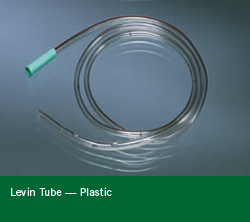
My Least Favorite Nasogastric Tube

This may be a little different than my previous posts, but a question today prompted this. I was asked why we don't use these NGT's, even though we have a pile of them in the drawer. I'm confident that if you've spent anytime around a hospital, you're familiar with them as well.

First and foremost, for whatever reason, unlike other tubes, there is no radioopaque markings on the tube. This means that on an X-ray, there is absolutely no way to tell if this tube is in position, coiled in the esophagus, or (heaven forbid!) in a patient's lung. From a medicine standpoint I find this unacceptable; from a malpractice standpoint it is one big liability. Once in a while, for whatever reason, the tube is in place, but I have difficulty auscultating it. A simple X-ray can confirm placement, but not with this tube.

The second reason is that it is a single lumen tube. For feeding purposes this is ok, but for suction it is less than ideal. A tube with a sump will prevent the little holes from sucking onto the gastric mucosa and causing irritation, or worse.

The third reason is that these Levin tubes are very flexible, and are quite difficult to place. Even resorting to placing them on ice to stiffen them, they are still too flexible, and unless the patient is very cooperative, the placement is a chore.

Thankfully, with many other choices available, I don't use the Levin nasogastic tube anymore.


 Save This Page

10.20.2006

Minute Clinics

I saw a story on the ABC Nightly News this week that really was rather one sided (I haven't been able to find the link yet). The story dealt with so called rapid health care available in mass merchandisers like chain pharmacies, and big block retailers. Now with 40 million Americans with no insurance, anything that gets more affordable health care to folks should be a good thing, but the story was still kind of slanted. Here are my thoughts:

-The piece did not mention once that the care is often delivered by ancillary providers like nurse practitioners. This is not necessarily inferior, but they should realize there is no doctor at the clinic.

-While the costs are less, these places often don't accept insurance. For those that have health insurance, then this will end up being an out of pocket expense.

-If the clinic is in a pharmacy, there may be financial pressure exerted to prescribe more expensive drugs for treatment of a particular condition. Think about it, would a pharmacy clinic really encourage its practioner to utilize less expensive generic drugs?

-The story made no mention that this is probably adequate care for younger, healthier adults with simpler, acute health care needs. For a 20 year old women with a simple bladder infection, this can be a cost effective and convenient way to get an antibiotic. However, older Americans, with chronic health conditions deserve continuity of care, and better followup than these clinics can provide. Our diabetics, cardiac patients and COPDers need careful long term care to ensure their long term disease free survival. With our aging demographic, we have far more of these that need health care.

With the above points in mind, this makes the idea of a "minute clinic" just not right for the majority of adults that need health care.


 Save This Page

9.22.2006

On Digital Radiography

One of the hospitals I work at is converting their radiology department to all digital. They promise to have better organized films, and a faster turn around time. This is going to be supported by over twenty computer reading stations, strategically placed around the hospital floors to be be able to access these films.

The allure is great. To be able to view films on the floors is a "killer app." Apparently, we'll even be able to see the images from the comfort of the office, or at home. Perhaps we'll noever have to go through the file romm again searching out the "lost film" that we know was just taken. The system will be backed up continuously from a remote location.

However, all is not as rosy as it would seem. One thought that comes to mind is how we're going to be able to function in a power outage. My guess is that unless our X-ray vision glasses arrive, we'll be out of luck- at least for the duration of the blackout. Pretty soon, none of the radiology techs will even remember how to remember film, and the equipment won't be around anyway.

The other issue is for films for the surgeons. For many operations, from the fractured leg X-ray for the orthopedist, to the head CT for the neurosurgeon, to the angiogram for the vascular surgeon, there is no substitute for having the film available. In this current environment of preventing "wrong site surgery," this risk is just too big to take. And the list could go on and on as there really is no excuse for not having the appropriate imaging in the OR for the procedure. In our environment of less invasive procedures, we're even more reliant on our radiology imaging.

The plan is to bring a cart with a double monitor setup to the OR for the procedure. I'm not really sure how the surgeon is supposed to control the computer to see the film, and remain sterile. Perhaps a sterile mouse? (Just kidding!) Also, most CT's and angiograms are more films than will easily fit on even a dual monitor setup. There are also issues of what if the network traffic is slow, or someone kicks out the plug of the setup. Several of my colleagues are up in arms, and plan to bring their patients to radiology offices that still print films that they can put up in the OR.

Stay tuned to see how this all turns out. In my mind, it's real hard to improve on having a printed film up on the lightbox in the OR. While the allure of new technology is great, sometimes a simpler and lower tech solution is the way to go. When people's lives and well being are at stake, we should definitely adhere to simplicity.


 Save This Page

9.06.2006

Exceeding Work Limits

A large percentage of first-year medical residents exceeded limits on their work hours intended to reduce fatigue-related medical errors, according to a survey conducted by Harvard Medical School researchers. Violations were reported by residents working at 15 of 16 Massachusetts teaching hospitals.

The study found that 84 percent of 1,278 first-year residents surveyed reported at least one violation in the year after the rules were adopted in July 2003 by the national organization that oversees graduate medical education.

The rules limit residents to working 30 consecutive hours and an average of 80 hours a week, and require them to have an average of one day off every seven days.

Let's just say that when I was a resident, 80 hours a week would have been a part time job to me...


 Save This Page

You Know Doc, It's A Little White Pill...

If I had a nickel for everytime I heard that phrase, I definitely wouldn't have to work so hard. Patients often think that their all knowing doctors know every pill on the market, and can identify it from their description. How about when they bring their pills, but they are in an unmarked bottle without the label?

Staring at the pics in an out of date PDR is so last century. So, now there is a better way. Head on over to Wall's Medicine & Health Center. There, you'll be able to describe the pill by markings, color, and shape. Before you know it, you'll have that pill identified!


 Save This Page