
There is nothing wrong with just walking!

"There's something quaint about the way Dr. Matthew Doppelt used to take electronic notes. The solo practitioner at South Eastern Dermatology Consultants P.A. in Knoxville, Tenn., used to speak into a digital recorder, upload the files, and send them to a transcription service. Then he'd cough up $1,600 a month for next-day service to get Word files of the reports.
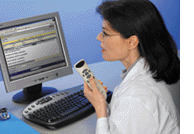
Things changed last year when Doppelt got a wireless Toshiba M200 tablet PC running Dragon NaturallySpeaking Medical voice-recognition software from Nuance Communications Inc., an app he bought for less than $1,000. Now his dictation is electronically transcribed immediately as text. Doppelt can store those reports in patients' electronic medical records, using software from eClinicalWorks to manage those records.
Doppelt isn't alone in making this change. Medical functions that were commonly outsourced are increasingly being automated. Not only that, but in medical practices, where wireless networks are becoming important tools for clinical applications such as writing electronic prescriptions, the ability to transcribe notes using wireless devices is becoming critical. Other providers of voice-recognition dictation products include Philips and IBM."
While there are obvious benefits of a major computer upgrade, the real focus of the Mary Street project was converting to EMR. That was not a trivial undertaking.
“Mary Street went through a learning curve,” says Mitchell. He notes that there’s an inevitable performance hit, but that it quickly pays off. “You tend to lose twenty percent of your productivity the first month, ten percent in the second month, then break even in the third month. You then become very efficient.”
Dodds agrees that it took some effort to make the transition. “Different people within our clinic did it differently,” he notes.
“I’m one of the technophiles,” says Dodds. In particular, he types moderately well. So his own approach was to computerize everything he could. “I would go through the entire chart and try to archive it,” he recalls.
But even so, it was far from a trivial process. “How do you go from a paper chart to electronic records?” asks Dodds. Especially when that ‘chart’ may be a folder a half-inch thick... and you may have filing cabinets full of ones just like it? “It’s the single biggest issue with going electronic,” says Dodds. “You don’t just scan it all. You have to pick out what’s relevant.”
“We did a dual system for quite a while,” Dodds continues. Thus, the clinic opted to digitize old information as-needed, while keying new information directly into the new EMR system. The result was that after about four visits, most patients’ relevant information would end up in the EMR system.
Anything missing at that point can still be retrieved from the old paper folder and scanned in, as required. Fortunately, the scanning process is fairly efficient. “Scanning and OCRing [optical character recognition] are extremely fast and very accurate,” says Dodds.
At this point, the clinic is over the worst of the transition. “I get maybe one chart a week that we haven’t finished archiving,” he reports. Still, even now, when a patient is being sent to a surgeon, the full history needs to be dug out.

"Cranberries, which already are known to help thwart urinary tract infections, may also prevent tooth decay and cavities, dental researchers reported in the January issue of the journal Caries Research.
The same sticky compounds in the small, hard red fruit -- which is boiled into a jelly that is a staple at American winter holiday meals -- that help keep bacteria at bay in the bladder also appear to help prevent bacteria from clinging to teeth, according to the researchers.
They also found it seemed to help ward off plaque, a gooey substance formed from bits of food, saliva, and acid that can harbor bacteria and eventually irritate the gums.
"There's potential to find compounds there that prevent dental cavities," said Hyun Koo, an oral biologist at the University of Rochester Medical Center in New York."

Internet-based treatments for sufferers of panic disorder may be just as effective as face-to-face methods, a study by Monash University researchers has found....
The study compared the effectiveness of three types of treatment -- internet-based cognitive behaviour therapy sessions, face-to-face sessions, and the use of medication (Selective Serotonin Reuptake Inhibitor) monitored by a psychiatrist.
"If the online method is as effective as face-to-face sessions, as our research suggests, this is likely to improve treatment accessibility for so many people, particularly in rural areas where people may not be able to access face-to-face treatment easily," she said.
"It could also be particularly useful to people suffering agoraphobia, who may feel unable to leave the house."
"We're not saying there will be no need for face-to-face therapy, this is just another method of therapy that people can access."

DALLAS, Nov. 16 — Combining robotically assisted coronary artery bypass surgery (CABG) with stented angioplasty shows promise for treating extensive coronary artery disease, researchers reported at the American Heart Association Scientific Sessions 2005.
“The minimally invasive procedure effectively bypassed or opened blocked arteries in all 27 patients, an outcome as good or better than you would expect with open chest surgery,” said Marc R. Katz, M.D., lead author of the study and chief of cardiac surgery and director of the Virginia Transplant Center at Henrico Doctors’ Hospital in Richmond.
“The patients stayed in the hospital an average of only two and a half days, compared with five or six days for conventional CABG surgery,” Katz said. “And they were back to work in a week or so, compared with the usual six to 12 weeks.”
The study involved patients with multi-vessel coronary disease, including obstruction of the left anterior descending coronary artery (LAD), the main artery in the front of the heart.
During the closed-chest bypass procedure, the left internal mammary artery (in the chest) was harvested. Doctors then sutured the mammary artery to the obstructed LAD, bypassing the obstruction, all done endoscopically.
During the angioplasty procedure, doctors used stents (mesh tubes) to unblock other arteries and then prop them open.

Ken Falk, President of Fraser Valley Duck and Goose Ltd., lost 140,000 birds in the outbreak of a bird flu in Canada's western province of British Columbia in 2004. Now he is bracing for another possible hit to his family-owned business.
Falk's farm remains under quarantine a day after one of his 60,000 ducks tested positive for the H5 strain of bird flu.
Officials from the Canadian Food Inspection Agency (CFIA) are visiting farms in a five-km radius around the duck and goose farm in the town of Chilliwack in southern British Columbia. They are warning bird owners to practise strict biosecurity.
Swab samples from the infected ducks are on their way to a national health research center in Winnipeg, which houses one of the world's most secure labs for the testing of deadly diseases, for further testing. It will take two days of tests to determine if it is the same type that has infected humans in Asia.
On Saturday, local reports say the CFIA will order the cull of all birds on Falk's farm, meaning a precautionary killing of Falk's birds.
"We have to do something to ensure this H5 strain doesn't mutate and get into the environment," Cornelius Kiley with the CFIA told CTV.
"Obviously we're very sad about that. And it's going to be hard but as an industry, we've decided to be proactive," Falk said.
According to Saturday's Vancouver Sun, the virus showed up after Falk sent a sample of birds from his farm to a government lab to be tested for something unrelated to avian flu.

NEW YORK (Reuters Health) - Treatment with Viagra (sildenafil) can improve exercise capacity and functional ability in patients with pulmonary arterial hypertension, a serious disease involving high pressure in the blood vessels that enter the lungs, new research suggests.
The findings, which appear in The New England Journal of Medicine, are based on a study of 278 patients who were randomly selected to receive Viagra, at one of three doses, or inactive "placebo" three times daily for 12 weeks.
The main endpoint was the distance walked in 6 minutes. According to the report, the study did not have enough patients to assess the effect of Viagra on the risk of death.
At all of the doses tested, Viagra significantly improved the 6-minute walking distance when compared with placebo, lead author Dr. Nazzareno Galie, from the University of Bologna in Italy, and colleagues note. For the 222 patients who used Viagra for 1 year, the improvement in distance was 51 meters.
In addition, all of the Viagra doses were associated with a significant drop in lung blood pressure and with an improvement in functional ability.

You have a printer. What would you normally do with it? Print documents, probably forms and even a few photographs? Did you ever think you could print skin for yourself? How about organs, or even notebook screens?
If you think I’ve lost all of my senses, you are more wrong than Bill Gates was about future memory requirements.
So what exactly am I talking about? Researchers at the University of Manchester have developed an exciting technology where you take cells from the patient’s body and feed them into the computer. The system then analyses and multiplies them to the required level, which then fills up as "ink" in the first cartridge while the second cartridge contains the necessary gel. Once the process has started, multiple print layers ensure that a complex 3D skin is created and the dimensions are exactly as required

If people avoided major risk factors for cancer, more than a third of the 7 million annual deaths from the disease could be prevented, scientists said on Friday.
In a report in The Lancet medical journal, the researchers estimated how many deaths from 12 types of cancer were caused by exposure to nine risk factors.
They calculated that smoking, alcohol, obesity, poor diet, unsafe sex, lack of exercise and other factors contributed to 2.43 million cancer deaths worldwide in 2001.
"A third of cancer deaths could have been avoided had those risks been reduced," said Dr Majid Ezzati of the Harvard School of Public Health in the United States.
"Prevention is probably still our best bet for reducing cancer deaths. It is by far larger than what we may be able to achieve using medical technology."
Smoking, which is linked to lung, mouth, stomach, pancreatic and bladder cancers, is the biggest avoidable risk factor, followed by alcohol and not eating enough fruits and vegetables.
"Of the 2.43 million deaths, 37 percent of them are from lung cancer," said Ezzati. "The total lung cancer deaths in the world are 1.23 million and of those 900,000 of them are caused by these risk factors."

The AP is reporting an advance in tissue-engineered vessels for the purpose of improving access for diabetics, dialysis patients, and maybe as a source for bypass grafting. Two patients had vessels grown from their own skin samples:
Like many patients in dialysis, the two Argentines, a 56-year-old woman and a 61-year-old man, were faced with the prospect of running out of healthy blood vessels. To grow new ones, doctors took a small piece of skin and a vein from the back of the hand, and nurtured them in a laboratory dish with growth enhancers to help produce substances like collagen and elastin, which give tissues their shape and texture.
The process produced two types of tissue: one that forms the tough structure or backbone of the vessel and one that lines it and helps it to function.
The feel of the new tissue "was very similar to the other vessels" that were present from birth, said Dr. Sergio Garrido, the surgeon who implanted it in the two patients.
The woman's new vessel has withstood needle punctures three times a week for six months and the man's for almost three months.

The rate of caesarean-section deliveries performed in the U.S. reached a record high in 2004, despite efforts by the government to reduce the rate, according to data released on Tuesday by CDC's National Center for Health Statistics, the AP/Las Vegas Sun reports. Almost 1.2 million c-sections, or 29.1% of all births, were performed in the U.S. in 2004, which is an increase from 27.5% in 2003 and 20.7% in 1996. The government in 2000 introduced an agenda to reduce the rate of c-sections to 15% by 2010. The increase in the c-section rate can be attributed to patient and physician preference, physicians' fears of malpractice lawsuits over problems resulting from vaginal delivery and risks surrounding vaginal birth after c-section, according to the AP/Sun (Stobbe, AP/Las Vegas Sun, 11/16). Many physicians and hospitals will not allow VBACs because of malpractice and liability concerns. In addition, the American College of Obstetricians and Gynecologists in 1999 revised its guidelines to say that only hospitals with a surgical team immediately available should allow VBACs, spurring community hospitals to prohibit the procedure (Kaiser Daily Women's Health Policy Report, 8/24). The rate of VBACs has decreased 67% since 1996, accounting for 9.2% of births in 2004. A study released in December 2004 said 75% of VBACs observed were successful, with fewer than 1% of participants experiencing a uterine tear (Rubin, USA Today, 11/16).

Music fans may enjoy the ability to spool through 10,000 songs on their iPods, but medical experts warn that jumping from tune to tune has its risks.
Carl Irwin, from the British Chiropractic Association, said: "This is a really serious problem. The action needed to move the wheel on an iPod is totally unnatural and effectively separates the joint in the thumb every time you use it.
"This causes inflammation in the thumb or fingers and can be very painful. We have also seen cases of iPod users where the problem has spread to their elbow and neck."
Mr Irwin said he expected to see a rise over the next six months of patients complaining of symptoms typical of repetitive stress injury (RSI). Children using their players for extended periods could be storing up problems for adulthood as their joints were still growing, he added.
Apple, the maker of the iPod, has refused to comment on the warning. The company also faces pressure from American health experts who share the same concern over potential RSI risks.

It has not become quite as routine as having your teeth cleaned, but a growing number of people are going to hospitals to get their heart arteries unclogged and going home the same day.
New research presented Sunday at an American Heart Association conference suggests the approach is safe. It found complications were no greater in people who went home a few hours after having angioplasty than in those who were hospitalized overnight.
Doctors have been reluctant to adopt the outpatient method but ``this is the kind of study that's going to turn the trend,'' said Timothy Gardner, a Delaware cardiologist who heads the meeting committee but had no role in the research.
Patients, however, might not like being rushed out the door. Some may view it as the cardiac equivalent of ``drive-through deliveries,'' where new moms are sent home the day they give birth.
Angioplasty is one of the most common medical techniques in the world. About 600,000 are done each year in the United States.

So, it seems a company called Visioncare has come up with a tiny “telescope” that can be implanted in your eye. And no, no, it’s not for you to play bionic man with. Instead, it’s for people with age-related macular degeneration. That’s medspeak for when your retina starts going down the pooper. The implant gives you a 3X magnification, and focuses the light onto the parts of the retina that still work. It’s meant to be used on one eye, with central vision, while the other eye focuses on the periphery.

